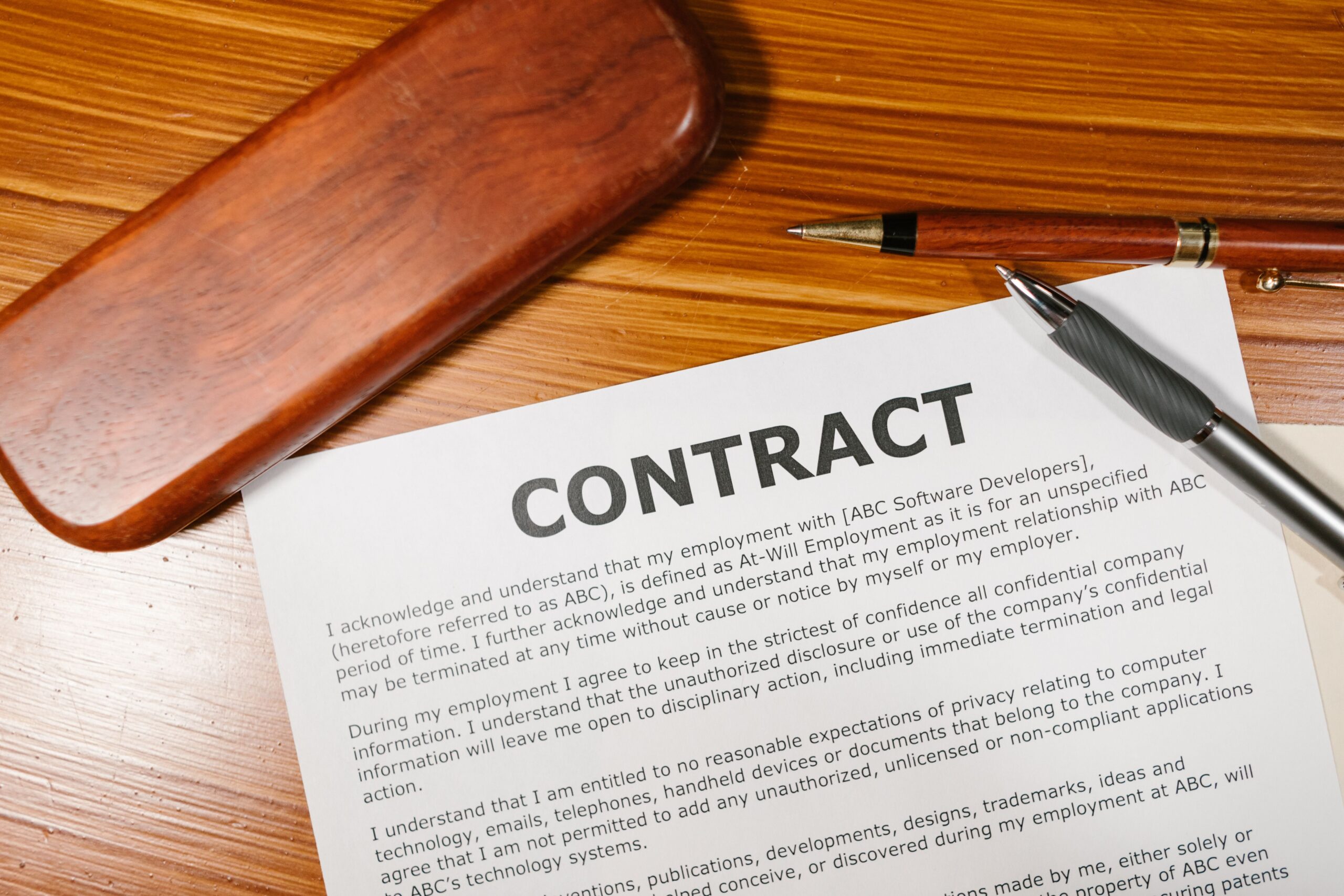
Figuring out how to get government contracts for small business usually starts the same way. A search for SAM.gov, a look at the Size Standards tool, a closed browser tab ten minutes later. That reaction is common, and it does not mean you are unprepared.
The federal government spent $793 billion on contracts in fiscal year 2025 (GAO, June 2026). Small businesses won $179 billion of that work, 28% of every prime contracting dollar the government awarded (SBA, June 2026). This guide walks through the real path, registration to your first award. It is built on what we have seen work for small businesses since 1995.
Why This Market Is Bigger Than Most Owners Realize
A lot of business owners assume federal contracting belongs to defense primes and Fortune 500 vendors. The data says otherwise. Small businesses received $179 billion in prime contracts in fiscal year 2025. Add subcontracts, and the figure climbs to nearly $273 billion, supporting 1.2 million jobs (SBA, June 2026).
The government’s own statutory goal is to send at least 23% of prime contracting dollars to small businesses every year. Agencies exceeded it again in FY2025.
For product and service sellers, the more useful number sits inside that total. The GSA Multiple Award Schedule is the contract vehicle federal agencies use most often for recurring purchases. It closed FY2025 with $50.6 billion in sales across roughly 14,579 active contractors (GSA SSQ+). Small businesses hold about 80% of those contracts and collect 36% of the award dollars.
That is not a niche program. It is where a meaningful share of federal buying actually happens, and most small businesses never look at it directly.
Step 1: Confirm You Actually Qualify as “Small”
Before anything else, check whether your business meets the SBA’s size standard for what you sell. Size standards are set by NAICS code, not by a flat employee or revenue number across the board. A 150-employee manufacturer can qualify as small under one NAICS code and not another. Pull the correct code for your primary product or service before you assume anything.
This step gets skipped more than any other, and it causes real problems later. A business that bids under the wrong NAICS code can win a contract and still face a size protest from a competitor. That protest delays payment and can put the award at risk.
Confirm your NAICS code and size standard first. Everything else in this guide depends on getting that right. For a fuller eligibility walkthrough, see our guide: Do You Qualify for a GSA Contract?
Step 2: Register in SAM.gov and Get Your UEI
The System for Award Management, SAM.gov, is the government’s master vendor database. No agency can pay you without an active SAM.gov registration. That registration is not complete without a Unique Entity ID (UEI), which SAM.gov now assigns directly during signup.
Registration is free, but it is not quick. Plan on several hours to gather your banking details, tax information, and NAICS codes, and expect the review itself to take one to two weeks. The single biggest cause of delay is inconsistency, a business name on your SAM.gov profile that does not exactly match your IRS records, for example. Triple-check every field against your official documents before you submit.
Once you are registered, keep the registration current. It expires annually, and a lapsed registration suspends your eligibility for payment mid-contract, not just for new awards.
Step 3: Look at Certifications Before You Bid on Anything
Many federal contracts, and a meaningful share of subcontracts from large primes, are set aside for specific categories of small business. In FY2025, Service-Disabled Veteran-Owned Small Businesses alone received $32.5 billion in prime contracts, ahead of their 5% federal goal (SBA, June 2026). If your business is veteran-owned, woman-owned, or sits in a HUBZone, check your eligibility through MySBA Certifications before you start bidding.
Some categories are self-certified. Others, like 8(a) or HUBZone, require an application.
This step matters even if you never plan to chase a set-aside contract directly. Contracting officers use these designations to build vendor pools. A certification on your SAM.gov profile puts you in front of buyers who are required to consider businesses like yours.
Step 4: Choose Your Path In
This is where most guides stop at “search SAM.gov for open solicitations,” and that advice is not wrong. It is just incomplete. SAM.gov lists individual contract opportunities that you bid on one at a time, against every other vendor watching that solicitation. It works, but it is a one-off sale every time, and you are competing from scratch on each one.
There is a second path most first-time sellers do not consider. It means becoming a standing vendor through a GSA Schedule Contract, formally called a Multiple Award Schedule (MAS) contract. Instead of winning one contract, you win the right to sell to any federal agency without a new competition for each order. Any office, from a Department of Defense installation to a small regional agency, can order directly from your Schedule.
Multiple companies can hold a Schedule for similar products at the same time, so winning one does not mean beating out every competitor.
Here is the part that surprises most business owners: a GSA Schedule is not reserved for massive companies. Small businesses hold roughly 80% of all active MAS contracts (GSA SSQ+). If you manufacture, distribute, or provide a professional service that agencies buy repeatedly, this path is usually the faster route to recurring federal revenue.
For the complete acquisition walkthrough, see our guide: How Do You Get A GSA Contract?
Step 5: Build the Case for a GSA Schedule Contract
A GSA Schedule runs for a five-year base period with three additional five-year option periods, twenty years total if every option is exercised. To keep the contract, you need at least $100,000 in Schedule sales during that first five-year period and $125,000 in each option period after that. Those numbers sound modest against $50.6 billion in program-wide sales, and they are meant to. GSA wants active sellers, not dormant listings.
The part of the application that trips people up is not the paperwork itself. It is the pricing documentation. Most small businesses submit their GSA Schedule offer before their commercial pricing practices are fully documented, and contracting officers flag that immediately. Preparing your commercial sales practice format correctly before you apply routinely saves weeks of back-and-forth.
This is also where an Authorized Negotiator earns their fee. Pricing negotiation is the slowest part of the review for most first-time applicants. Our guide on pricing strategies for GSA MAS Schedules covers what that documentation needs to include.
Once awarded, you owe an Industrial Funding Fee of 0.75% of your Schedule sales, paid quarterly. That fee funds the program you are now selling through. It is a cost of doing business on the Schedule, not a penalty, and most contractors build it into their federal pricing from day one.
Step 6: List on GSA Advantage and Make Sure Buyers Can Find You
Once your Schedule is active, your products or services can be listed on GSA Advantage. This is the online catalog federal buyers search when they want an approved vendor. A Schedule that never makes it onto GSA Advantage is functionally invisible.
Contracting officers do not go looking for vendors who have not bothered to list. They search the catalog and buy from what shows up.
Accuracy matters more here than almost anywhere else in the process. Clear pricing, complete product descriptions, and current lead times separate a listing that gets orders from one that sits unused behind a valid contract. Agencies can even search GSA Advantage by delivery time. If your lead times beat a competitor’s, put that detail at the top of your listing, not buried in a spec sheet.

Where Most Small Businesses Get Stuck
A few mistakes show up over and over, and each one is avoidable.
The first is treating SAM.gov registration as the finish line. It is the starting line. A completed profile with no bidding activity behind it generates no revenue on its own.
The second is applying for a GSA Schedule with incomplete pricing documentation, which we covered in Step 5. It is the single most common reason an application stalls in review.
The third is winning a Schedule and then letting the GSA Advantage listing go stale. An outdated catalog with old pricing makes an active, valid contract invisible to the buyers searching for it.
The fourth catches contractors after the fact rather than during the application. Once you are awarded, compliance work, sales reporting, pricing updates, and contract modifications become their own recurring job, covered in our guide to ongoing GSA contract management. GSA’s reporting requirements have tightened in 2026. Contractors who treat a Schedule as a one-time award instead of an ongoing obligation put their renewal at risk.
How GSA Contract Services Can Help You Get There
GSA Contract Services, LLC has worked exclusively in federal contracting since 1995. The team includes more than a dozen Authorized Negotiators and currently supports over 250 active clients across contract acquisition, compliance, and renewals. We have seen manufacturers add six figures in annual revenue within the first contract year of holding a Schedule. We have also seen well-prepared applications move through review faster, simply because the pricing documentation was right the first time.
Specific ways the team supports small businesses working through this process:
Getting your first GSA Schedule Contract, from the eligibility review through final award
Ongoing GSA Contract Management, including modifications, pricing updates, and audit support
GSA Order Management, so orders from agencies get processed accurately once they start arriving
EDI and XML catalog services, connecting your systems to GSA Advantage and FedMall so agencies can order directly
The firm also manages VA, FedMall, and DLA contracts, and holds status as a Certified Value Added Network for the Department of Defense.
Quick Recap
Getting your first federal contract comes down to a sequence, not a single application:
1. Confirm your NAICS code and SBA size standard
2. Register in SAM.gov and secure your UEI
3. Check your eligibility for set-aside certifications through MySBA Certifications
4. Decide between one-off SAM.gov bids and a standing GSA Schedule Contract
5. Build a complete, well-documented GSA Schedule application if that is your path
6. List on GSA Advantage and keep the catalog current
7. Treat compliance and reporting as an ongoing part of the job, not a one-time step
Frequently Asked Questions
How long does it take to get a GSA Schedule Contract?
Timelines vary by industry and by how prepared your pricing documentation is going in. Applications with complete, accurate pricing data generally move through review faster than those submitted with gaps. Incomplete pricing is the most common reason GSA sends an application back for revisions.
Do I need a GSA Schedule to sell to the federal government?
No. You can bid on individual SAM.gov solicitations without one. A Schedule is not required, but it remains one of the most reliable paths to repeat federal business. Agencies can order from you directly, without a new competition each time.
How much can a small business realistically make from federal contracts?
It depends entirely on the product or service and how actively the contract is managed. Small businesses collectively earned $179 billion in prime federal contracts in FY2025 (SBA, June 2026). Individual results vary widely based on pricing, GSA Advantage visibility, and how consistently a business pursues orders once a contract is active.
What is the difference between GSA Advantage and a GSA Schedule?
A GSA Schedule is the underlying contract. GSA Advantage is the public catalog where your products or services appear once that contract is active. That catalog is where federal buyers actually search and place orders.
Ready to Start Selling to the Federal Government?
If you manufacture, distribute, or provide a service that federal agencies buy, the fastest way to find out where you stand is a direct conversation. Contact Us to speak with an Authorized Negotiator, or call 202-280-7060.
GSA Contract Services, LLC | 4622 Cedar Avenue, Suite 123, Wilmington, NC 28403 | 202-280-7060 | Sales@GSA-CS.com | Serving small businesses in federal contracting since 1995